Delphin Guide
Nano Banana vs OpenAI Images 2.0
Compare Nano Banana and OpenAI Images 2.0 across naming, workflow, editing depth, and developer fit so you can choose the right image stack.
Why This Guide Matters
This comparison starts with an important clarification. Nano Banana is widely used as a Google-side product or community label, while the developer documentation usually points you toward Gemini image generation APIs rather than a public nano-banana endpoint name. OpenAI, by contrast, now has a clearer split between ChatGPT Images 2.0 as the product experience and gpt-image-2 as the API path.
How To Use This Workflow
1. Clarify the naming before comparing output
Treat Nano Banana as the Google-side image experience and Images 2.0 as OpenAI's current image release so you are not mixing product branding with API labels.
2. Choose based on your bottleneck
If you mostly need faster ideation, your answer may differ from a team that needs typography, revisions, and shipping-ready creative assets.
3. Compare the ecosystems, not only the samples
API maturity, edit flow, platform fit, and how the model plugs into your current stack often matter more than one viral side-by-side image.
This is partly a naming problem
A lot of confusion in this comparison comes from vocabulary. On the Google side, many people say Nano Banana when they mean the newer Gemini image-generation experience. On the OpenAI side, many people say Images 2.0 when they mean the current ChatGPT release plus the gpt-image-2 developer path.
Once you clear that up, the comparison becomes much more useful. You are not really comparing two isolated screenshots. You are comparing two image ecosystems, each with a different strength profile and a different integration story.
- Nano Banana is commonly used as a Google-side label rather than a formal API model name.
- Google developer access is framed through Gemini image generation documentation.
- Images 2.0 is the OpenAI product label; gpt-image-2 is the API-facing model.
- The practical winner depends on speed, edits, and deployment goals.
Where Nano Banana tends to win
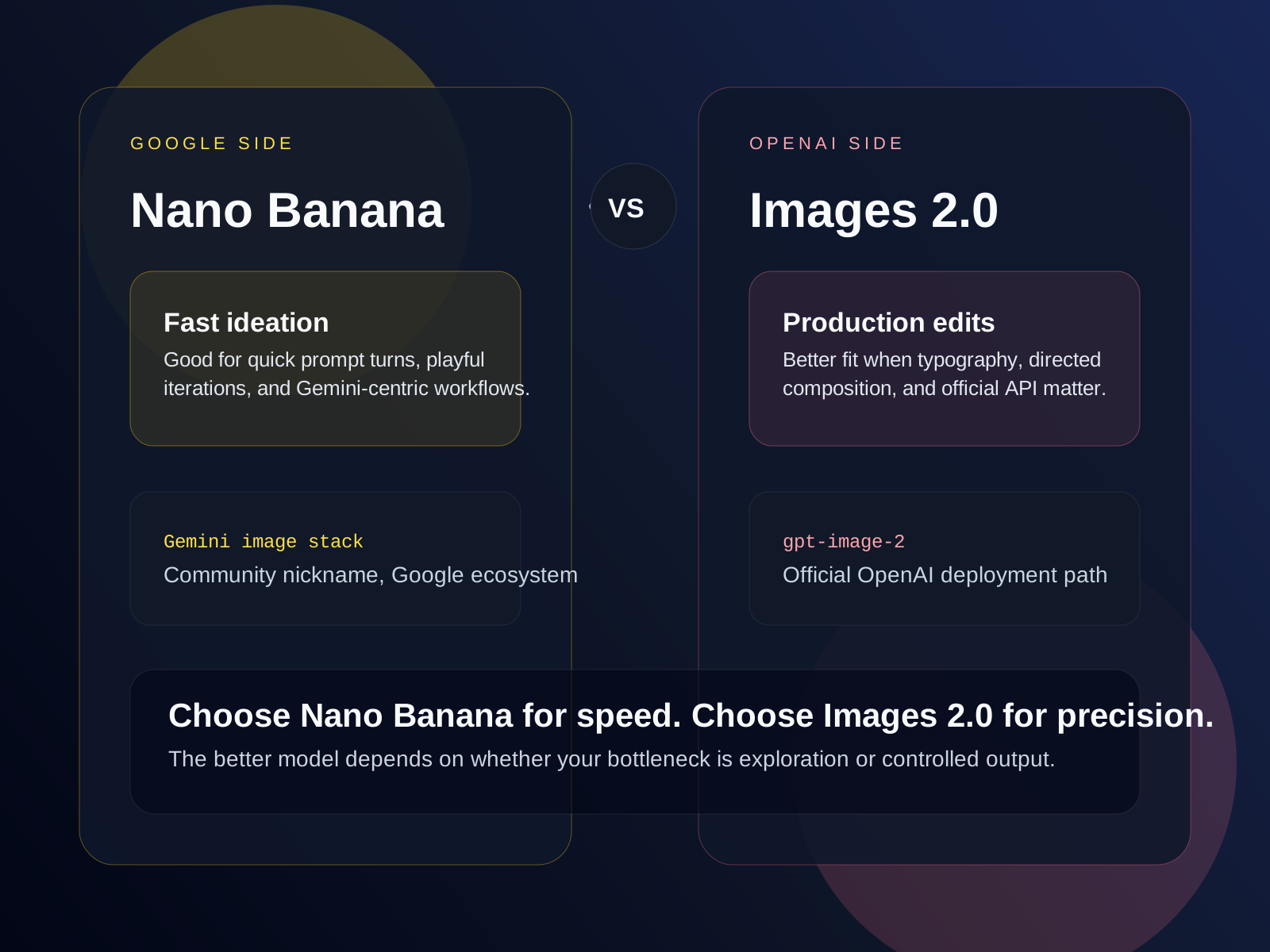
Nano Banana often makes the strongest case when the team values fast ideation, playful prompt iteration, and a workflow that already lives inside the broader Gemini stack. If the main job is to generate many loose options quickly and decide later, that kind of speed can matter more than surgical control.
- Quick concept exploration and lightweight iteration loops
- A natural fit for teams already standardized on Google's Gemini tooling
- Good for early-stage idea volume where precision is not yet the bottleneck
- A more comfortable choice when the rest of the workflow already sits in Google infrastructure
Where Images 2.0 tends to win
OpenAI Images 2.0 makes a stronger case when precision is the point. If your image has to include better text handling, fit a brand direction, or survive several rounds of reference-based edits, OpenAI's official image stack currently has the cleaner story.
Text inside the frame
This is where a lot of practical product work either succeeds or falls apart. The more your team cares about poster copy, packaging labels, signage, or UI compositions, the more valuable stronger text fidelity becomes.
Edit loops and references
OpenAI's current docs clearly support image edits, which matters for brand teams and product teams that rarely start from zero. They usually start from an existing mockup, shot, or campaign draft and need controlled revision.
Official API fit
If you want to wire image generation directly into a website, product dashboard, or internal creative tool, OpenAI now offers a clearer official route. That reduces ambiguity for engineering teams making production decisions.
Which one should a product team choose
Choose Nano Banana when your biggest constraint is exploration speed. Choose Images 2.0 when your biggest constraint is output control. A lot of teams will even use both at different stages: Google-side ideation earlier, OpenAI-side finishing later.
- Use Nano Banana for early exploration and broad option generation.
- Use Images 2.0 for polished brand assets and reference-led revisions.
- Use both if your pipeline naturally separates ideation from final creative production.
FAQ
Is Nano Banana an official public API model name?
Not in the same clean way that gpt-image-2 is documented by OpenAI. In practice, people use Nano Banana as a Google-side product or community label while developers work through Gemini image generation documentation.
Which model is better for typography and layout-sensitive images?
Images 2.0 is usually the safer choice when text fidelity and controlled layout matter more than raw ideation speed.
Should I choose based on a single benchmark image?
No. Integration quality, edit support, consistency, and ecosystem fit are usually more important than one attractive sample.