Delphin Guide
What Is OpenAI Images 2.0? ChatGPT Images 2.0 Explained
Understand what OpenAI Images 2.0 actually refers to, how it maps to ChatGPT Images 2.0 and gpt-image-2, and why creators are paying attention.
Why This Guide Matters
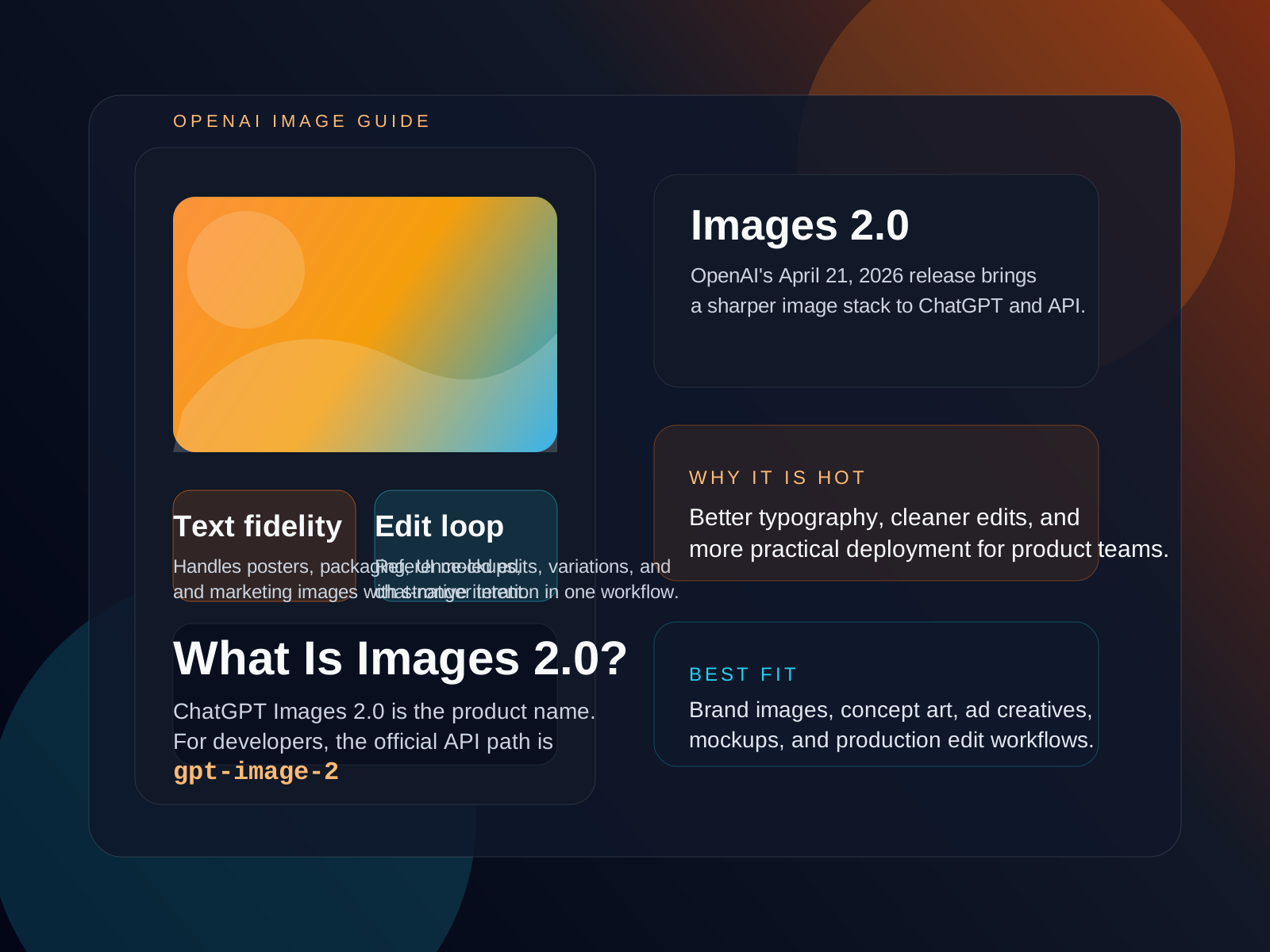
As of April 22, 2026, OpenAI's user-facing launch is called ChatGPT Images 2.0, while the developer-facing path lives under the Images API and the gpt-image-2 model. The important takeaway is that this is not just a flashy demo moment. It is a practical image stack for generation, editing, and product integration.
How To Use This Workflow
1. Separate the product name from the model name
Think of ChatGPT Images 2.0 as the public product label, then map the actual developer surface to the official Images API and gpt-image-2.
2. Judge it by workflow, not by hype
Look at whether you need stronger typography, cleaner compositional control, and a reliable edit loop rather than only chasing a viral release.
3. Match the tool to the output type
It is especially useful when your team needs marketing creatives, concept art, UI mockups, product visuals, or reference-based edits that still fit a production workflow.
What Images 2.0 actually refers to
The phrase OpenAI Images 2.0 is a convenient shorthand, but the official naming is split across product and API surfaces. On the product side, OpenAI announced ChatGPT Images 2.0 on April 21, 2026. On the developer side, the current model and documentation point to gpt-image-2 through the official image generation and edit APIs.
That distinction matters because teams often confuse a viral ChatGPT feature launch with API availability. In this case, the good news is that the two are connected. The product release has a real developer story behind it rather than being limited to the ChatGPT interface.
- ChatGPT Images 2.0 is the consumer-facing name.
- gpt-image-2 is the current API-facing model name in OpenAI docs.
- OpenAI documents both prompt-only generation and reference-image edits.
- Some organizations may need verification before full access to image models.
Why creators and product teams are paying attention
The biggest reason is not just image quality in the abstract. It is that the system is trying to solve more practical image problems: directed composition, sharper text handling, cleaner brand-style iteration, and a more useful edit loop when you already have inputs.
For many teams, that changes the economics of image production. Instead of using one tool for ideation, another for edits, and a third for final cleanup, OpenAI is making a stronger case for a single image workflow that can start rough and become production-grade through iteration.
Text and layout fidelity
This matters for posters, social creatives, product packaging, UI mockups, and any image where words inside the frame are part of the actual deliverable rather than a happy accident.
Editability instead of one-shot prompting
OpenAI's image docs now frame edits as a first-class workflow. That is important because most real teams are not generating from zero every time. They are revising an existing asset, a brand image, or a draft creative.
A cleaner deployment story
Once a model has an official API path, it becomes much easier to justify in a real product. Billing, auth, moderation, rate limits, and server-side routing all become easier to reason about than an interface-only release.
Where Images 2.0 fits best right now
Images 2.0 is strongest when the output has to survive contact with the real world. If the image is going into an ad account, product detail page, investor deck, pitch mockup, or on-site creative workflow, precision and editability matter more than raw novelty.
- Marketing and campaign visuals that need stronger art direction
- Product renders and lifestyle scenes with controllable revisions
- Brand-aligned social assets where text inside the image matters
- Concept art or storyboards that benefit from iterative editing
- Website-integrated generation flows where an official API is preferable
What teams should verify before committing
Even when the official story is strong, production adoption still needs a checklist. The right question is not whether the model is impressive. The right question is whether your organization can deploy it safely, predictably, and economically.
- Check whether your OpenAI organization needs verification for image access.
- Benchmark latency and cost against your expected image volume.
- Decide how much prompt freedom to expose to end users.
- Keep a fallback provider in mind if uptime or pricing becomes a concern.
FAQ
Is Images 2.0 the same thing as gpt-image-2?
Not exactly. Images 2.0 is the public shorthand for the current OpenAI image release, while gpt-image-2 is the API-facing model name documented for developers.
Can I use Images 2.0 outside ChatGPT?
Yes. OpenAI's current developer docs describe official image generation and image edit workflows, so the capability is not limited to the ChatGPT interface.
Why is this release more useful than a normal image-model announcement?
Because it pairs a consumer launch with a real API path. That makes it immediately more relevant for websites, creator tools, and internal production systems.